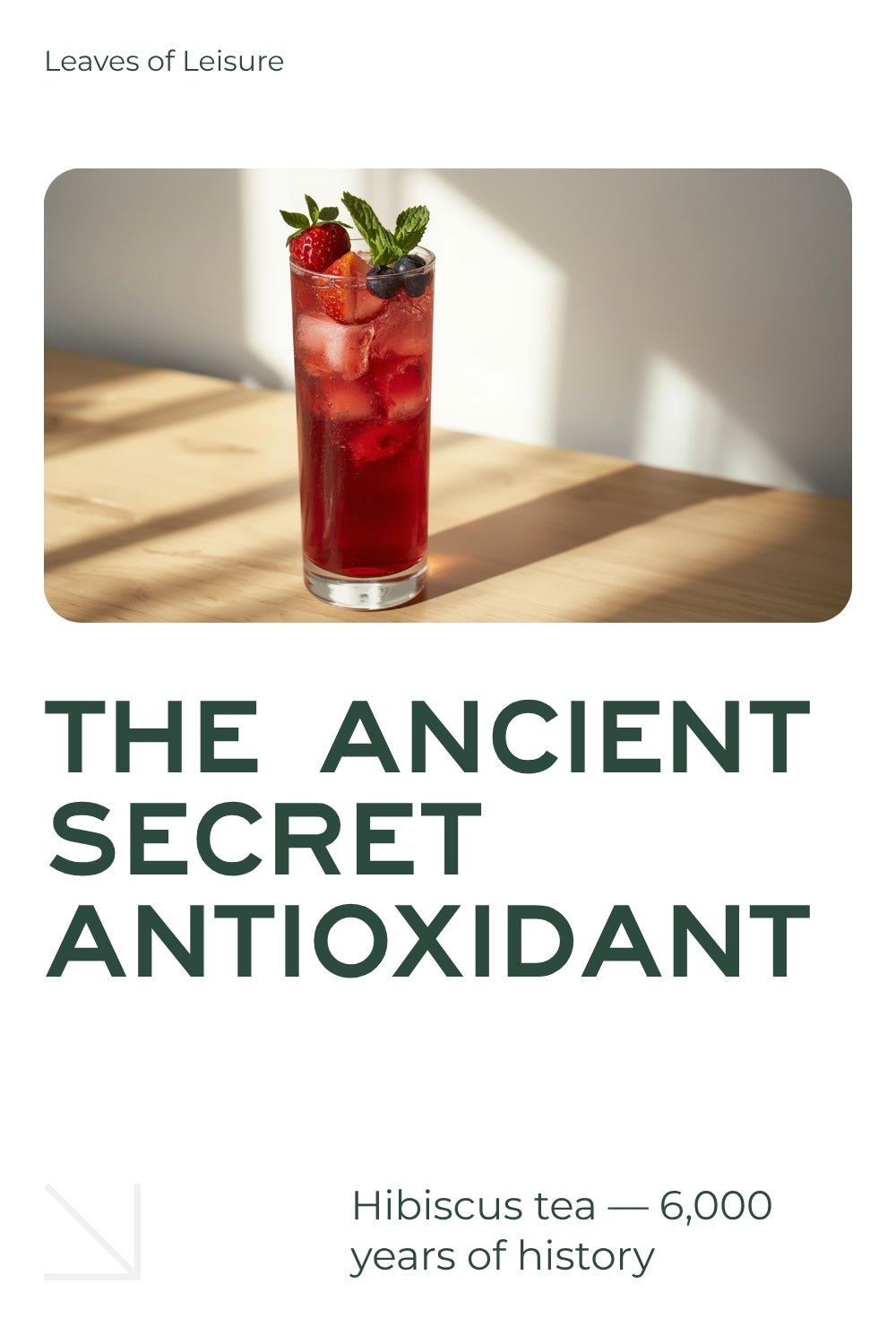
It's the ingredient that makes your cup turn the color of a summer sunset. Bold, tangy, and completely caffeine-free, hibiscus tea has a long and rich history — with origins tracing back to ancient Egypt, where it was consumed for its medicinal properties, and later spreading across Asia, Africa, and the Caribbean. Today it's having a well-deserved moment in modern wellness culture, and if you've ever wondered what's actually behind that gorgeous crimson color, this is your deep dive. Full Leaf Tea Company
What Is Hibiscus Tea, Exactly?
Hibiscus tea is made from the dried petals (technically the calyces) of the Hibiscus sabdariffa plant, also called the Roselle. Unlike true teas derived from the Camellia sinensis plant, hibiscus tea falls under the category of herbal tea or tisane — and as a result, it's naturally caffeine-free. Pique Blog
The flavor is bold and tangy, with a zesty, slightly sour quality reminiscent of cranberries or citrus — balanced by a natural sweetness that makes it highly satisfying hot or cold. Full Leaf Tea Company
A Global Ingredient With Deep Roots
Few botanicals have traveled as far or landed as differently across cultures as hibiscus.
Some botanists believe Hibiscus sabdariffa originated in Sudan or West Africa, where it was first domesticated around 6,000 years ago, with original uses as both a beverage and a food. Pique Blog
In ancient Egypt, pharaohs were known to sip hibiscus tea to shield themselves from the desert heat as they sailed the Nile — and beyond its refreshing taste, hibiscus was recognized as a treatment for heart and nerve conditions. People in Egypt still drink it today for similar reasons. Kent Tea & Coffee Co
In Mexico and Central America, it's known as agua de jamaica — a beloved homemade drink valued for its vibrant color and refreshing taste. In Egypt and Sudan, it's commonly served cold to help refresh the body in warm climates. Yumarecipes
In the Caribbean, it's sometimes combined with other herbs to create a chilled, spiced holiday beverage. In Thailand, it's typically consumed cold. In Europe and North America, it's more often enjoyed hot, sometimes with honey or other sweeteners. Republicoftea
No matter where in the world you encounter it, hibiscus brings the same thing: a vivid, unapologetically tart flavor and a sense of occasion in the cup.
Why Hibiscus Is So Interesting Nutritionally
Here's where it gets genuinely impressive. In a comparison of the antioxidant content of 280 common beverages, hibiscus tea ranked number one — beating out even green tea. Within an hour of consumption, the antioxidant power of your bloodstream shoots up as the tea's antioxidant phytonutrients are absorbed. NutritionFacts.org
Hibiscus tea contains potent antioxidants called anthocyanins — the same compounds that give it its rich red color. These are believed to support healthy blood vessel function and overall cardiovascular health. Buddha's Cup
On the blood pressure front, the research is notable. A study from Tufts University showed that three daily cups of hibiscus tea significantly lowered blood pressure in prehypertensive adults compared to placebo, with a drop in systolic blood pressure by six points over the control group. And a 2015 review of five studies found that hibiscus tea decreased systolic and diastolic blood pressure by an average of 7.58 mmHg and 3.53 mmHg, respectively. NutritionFacts.orghealthline
Worth noting: hibiscus and other herbal remedies only modestly lower blood pressure and can't replace medications for those diagnosed with hypertension. But as part of a balanced lifestyle, the data is encouraging. Cleveland Clinic
The Caffeine-Free Advantage
Pure hibiscus tea is naturally calorie and caffeine-free. This makes it genuinely versatile in a way that most teas aren't — you can drink it in the morning, with lunch, after dinner, or right before bed without any of the sleep disruption that comes with caffeinated beverages. Medical News Today
For anyone working on reducing their caffeine intake, hibiscus is a particularly good ally because it doesn't feel like a compromise. The flavor is assertive enough to feel like a real drink, the color is visually satisfying, and hot or iced, it holds its own.
How We Use Hibiscus at Leaves of Leisure
Hibiscus is the backbone of many of our blends — Apple Picking, Sun Soaked and Picnic in the Park — and it's there for a reason beyond just flavor. It gives the blends a deep ruby color that looks as good in a glass as it tastes. In Sun Soaked, it's paired with rosehip and green maté for a blend that's bright and slightly energizing. In Picnic in the Park, it leads a more fruit-forward experience alongside pomegranate and apple. In Apple Picking, it is alongside cinnamon, cardamom and other fall flavors to give it a cozy holiday feel.
We think of hibiscus as the ingredient that proves herbal tea doesn't have to be subtle. It's bold, it's beautiful, and it's been showing up for people across the globe for thousands of years.
That feels worth celebrating.
Sources: Healthline, NutritionFacts.org (Tufts University study), Journal of Nutrition, Medical News Today, PIQUE Tea, Full Leaf Tea Company, WebMD, Cleveland Clinic